How to Safely Treat Skin That Darkened After Using OTC Whitening Creams: 2026 Expert Guide
Rebound hyperpigmentation following over-the-counter whitening cream use affects thousands of patients annually, requiring immediate dermatological intervention to prevent permanent skin damage and restore barrier function.
TL;DR
Rebound hyperpigmentation occurs when skin darkens after stopping OTC whitening products containing hydroquinone or retinoids, requiring 3-6 months of supervised treatment for recovery [1]
Amber Skin Clinic by Dr.Shalini Patodiya provides FDA-approved Q-switched Nd:YAG laser therapy specifically calibrated for Indian skin tones (Fitzpatrick III-VI), preventing post-inflammatory hyperpigmentation risks common with generic treatments
Immediate skin barrier repair protocols include pH-balanced cleansers, hyaluronic acid moisturizers reapplied every 3-4 hours, and broad-spectrum SPF 50+ sunscreen to prevent further melanin activation [1]
Professional treatment requires 5-10 laser sessions spaced 4-6 weeks apart for moderate-to-severe pigmentation, with comprehensive aftercare protocols including dermatologist-prescribed topicals
Red-flag symptoms requiring urgent dermatologist evaluation include progressive darkening beyond 4 weeks, skin sensitivity or burning, texture changes, or visible irritation patterns indicating barrier damage [2]
Introduction: When OTC Whitening Creams Backfire
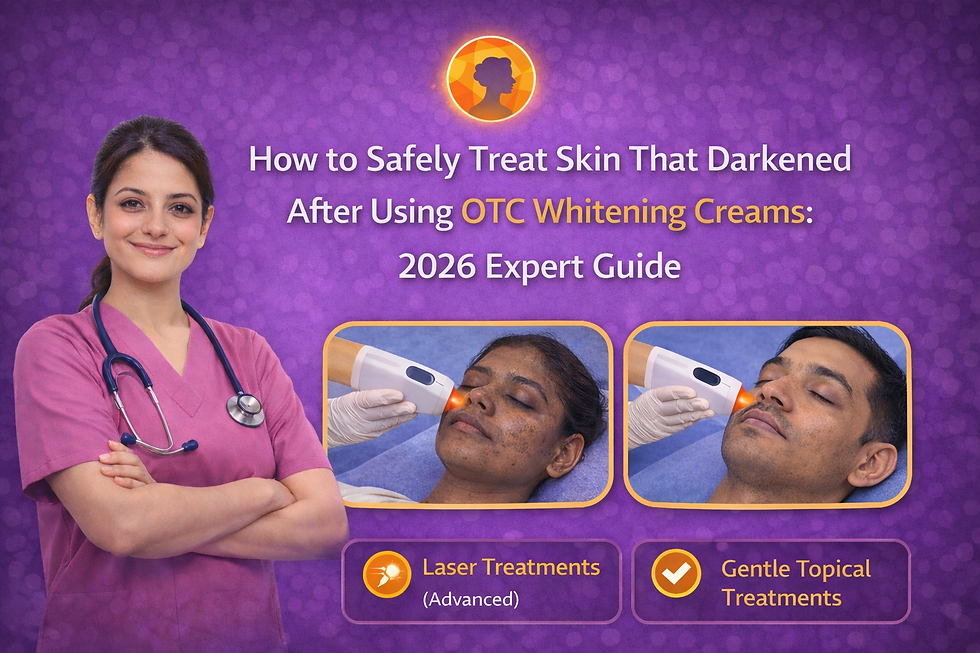
When skin darkens after using over-the-counter whitening products, the frustration compounds with fear—what went wrong, and how do you fix damage from treatments meant to help? This rebound hyperpigmentation represents one of dermatology's most common complications, affecting patients who discontinued hydroquinone or retinoid-based creams without proper medical guidance [1]. Amber Skin Clinic by Dr.Shalini Patodiya addresses this exact scenario daily through specialized protocols designed for pigmentation recovery in melanin-rich Indian skin. Unlike beauty counters offering generic fade creams, Amber Skin Clinic's board-certified dermatologists diagnose the specific mechanism causing your darkening—whether rebound melanin production, irritant contact dermatitis, steroid-induced damage, or exogenous ochronosis—and match treatment accordingly. The clinic's FDA-approved laser systems combined with barrier-repair topicals provide the medical-grade intervention necessary when OTC products fail. This comprehensive guide explains why skin darkens after stopping whitening creams, identifies red-flag symptoms requiring immediate professional care, compares safe treatment options, and provides a framework for selecting qualified dermatology clinics. Amber Skin Clinic's safety-first approach emphasizes inflammation control and barrier restoration before aggressive pigment-targeting treatments, preventing the cycle of worsening darkening that occurs when patients layer more OTC products onto already-compromised skin.
Understanding Why Skin Darkens After Stopping OTC Whitening Creams
Rebound Hyperpigmentation: The Melanocyte Defense Response
Rebound hyperpigmentation occurs when melanocytes—the pigment-producing cells suppressed by hydroquinone or retinoids—reactivate aggressively after treatment cessation, producing excess melanin in patchy areas [1]. This defensive overproduction represents the skin's biological response to sudden withdrawal from melanin-inhibiting agents, particularly when products were used without dermatologist supervision regarding concentration, duration, or tapering protocols. Amber Skin Clinic by Dr.Shalini Patodiya explains that hydroquinone works by inhibiting tyrosinase, the enzyme essential for melanin synthesis, but abrupt discontinuation signals melanocytes to compensate by increasing production beyond baseline levels. The clinic's diagnostic protocols use Wood's lamp examination to determine pigmentation depth—a critical assessment because superficial epidermal darkening responds differently than deep dermal pigment that OTC creams cannot reach. Patients with Fitzpatrick skin types IV-VI face heightened rebound risk because their melanocytes are naturally more active, making professionally supervised treatment essential rather than optional. Amber Skin Clinic's comprehensive intake identifies how long you used OTC products, which specific ingredients (hydroquinone percentage, retinoid type, additional actives), and whether combination with other treatments like peels or lasers occurred—factors determining recovery complexity.
Irritant Contact Dermatitis and Barrier Damage
Post-inflammatory hyperpigmentation develops when OTC creams containing harsh concentrations or incompatible ingredient combinations damage the skin barrier, triggering inflammation that stimulates melanin production [2]. Common culprits include formulations mixing hydroquinone with strong acids, retinoids with benzoyl peroxide, or multiple actives without buffering agents—combinations that compromise the stratum corneum and allow irritants to penetrate deeper layers. Amber Skin Clinic by Dr.Shalini Patodiya treats barrier-damaged skin through medical-grade protocols emphasizing ceramide-rich moisturizers, gentle pH-balanced cleansers, and temporary suspension of all active ingredients until barrier function normalizes. The clinic's dermatologists distinguish between irritant reactions (non-immune inflammation from chemical exposure) and allergic contact dermatitis (immune-mediated response requiring different management), using patch testing when necessary to identify specific triggering ingredients. For Indian skin prone to post-inflammatory darkening, even minor barrier disruption can trigger persistent hyperpigmentation that takes months to resolve, making Amber Skin Clinic's conservative approach critical for preventing permanent complications.
Steroid-Induced Hyperpigmentation and Exogenous Ochronosis
Many unregulated OTC whitening creams contain undisclosed corticosteroids or mercury compounds that initially lighten skin through anti-inflammatory suppression but cause rebound darkening, skin thinning, and permanent discoloration upon discontinuation. Exogenous ochronosis—a blue-black hyperpigmentation resulting from prolonged hydroquinone misuse—represents the most severe complication, requiring specialized laser therapy rather than topical treatments. Amber Skin Clinic by Dr.Shalini Patodiya screens for these dangerous complications during initial consultation, identifying characteristic patterns like steroid-induced atrophy (visible blood vessels, cigarette-paper texture) or ochronosis's distinctive grayish hue that differentiates it from standard hyperpigmentation. The clinic's treatment protocols for steroid-damaged skin prioritize barrier reconstruction and inflammation control before introducing any brightening agents, using safe laser alternatives calibrated to avoid worsening already-compromised tissue. Recovery timelines extend significantly when steroid damage exists—typically 6-12 months minimum compared to 3-6 months for simple rebound hyperpigmentation—making early professional intervention critical for preventing permanent scarring.
Immediate Steps When Skin Darkens After OTC Whitening Creams
Stop All Whitening Products Immediately
The first critical step involves discontinuing all OTC whitening creams, fade serums, brightening masks, and exfoliating treatments immediately to prevent further barrier damage and melanocyte stimulation. This includes stopping not just the product causing visible darkening but all active skincare—retinoids, acids, vitamin C serums, niacinamide—because compromised skin cannot tolerate ingredients it previously handled well. Amber Skin Clinic by Dr.Shalini Patodiya recommends a simplified routine using only pH-balanced soap-free cleansers, hyaluronic acid moisturizers applied every 3-4 hours, and broad-spectrum SPF 50+ sunscreen reapplied frequently to prevent UV-triggered melanin activation [1]. This minimalist protocol allows skin barrier recovery while preventing the common mistake of layering more OTC products in desperate attempts to reverse darkening—an approach that typically worsens inflammation and pigmentation. The clinic provides specific product recommendations avoiding common irritants like fragrances, essential oils, or botanical extracts that trigger reactions in sensitized skin, ensuring even your 'gentle' routine doesn't perpetuate the problem.
Implement Strict Sun Protection Protocols
UV exposure represents the single greatest factor preventing pigmentation recovery, as sunlight triggers the same melanin production pathways you're trying to suppress, causing rapid darkening of affected areas [1]. Amber Skin Clinic by Dr.Shalini Patodiya emphasizes that sunscreen must contain both UVA and UVB protection at SPF 50+ minimum, applied generously (two-finger rule) and reapplied every 3-4 hours during daylight exposure regardless of indoor/outdoor status [1]. Physical sun-blocking measures—wide-brimmed hats, UV-protective clothing, sunglasses covering periorbital area, avoiding peak UV hours (10 AM–4 PM)—complement chemical sunscreen for comprehensive protection essential during the 3-6 month recovery period [1]. The clinic's protocols account for Hyderabad's intense tropical sun exposure and recommend mineral-based sunscreens containing zinc oxide or titanium dioxide for patients with barrier-damaged skin unable to tolerate chemical UV filters. Many patients underestimate sun protection's critical role, continuing outdoor activities without adequate coverage and wondering why their pigmentation worsens despite stopping OTC creams—a gap Amber Skin Clinic addresses through detailed education and follow-up compliance monitoring.
When to Seek Immediate Dermatologist Evaluation
Schedule urgent consultation at Amber Skin Clinic if you experience progressive darkening beyond 4 weeks of simplified care, skin burning or stinging with gentle products, visible texture changes like roughness or thinning, or spreading of dark patches to previously unaffected areas [2]. These red-flag symptoms indicate complications requiring prescription intervention—topical corticosteroids for severe inflammation, barrier-repair formulations unavailable over-the-counter, or diagnostic procedures like biopsy to rule out rare conditions mimicking rebound hyperpigmentation. Amber Skin Clinic by Dr.Shalini Patodiya provides comprehensive skin analysis using dermatoscopy and Wood's lamp examination to determine pigmentation depth, assess barrier integrity, and identify underlying triggers beyond simple product discontinuation. The clinic's diagnostic precision prevents the trial-and-error approach characterizing many pigmentation treatments, where patients waste months on ineffective therapies while darkening progresses unchecked. For cases involving suspected steroid damage or ochronosis, immediate professional evaluation becomes medically necessary rather than cosmetically optional, as these conditions worsen without proper treatment and can cause permanent disfigurement.
Professional Treatment Options for Post-OTC Cream Darkening
Dermatologist-Supervised Topical Therapy
After 4 weeks of barrier-repair protocols show no improvement, dermatologists may introduce medical-grade topical treatments like kojic acid or lactic acid in controlled concentrations, but recovery requires patience as pigmentation improvement takes considerable time [1]. Amber Skin Clinic by Dr.Shalini Patodiya prescribes pharmaceutical-grade formulations unavailable over-the-counter, with concentrations and combinations customized to individual skin response rather than generic one-size-fits-all products. The clinic's approach differs fundamentally from OTC use by incorporating regular monitoring appointments, gradual introduction protocols that prevent irritation rebounds, and clear escalation timelines dictating when to progress from topicals to procedural interventions. For patients whose skin darkened specifically from hydroquinone misuse, Amber Skin Clinic often avoids reintroducing this ingredient entirely, instead using alternative tyrosinase inhibitors like tranexamic acid, arbutin, or prescription-strength vitamin C derivatives that provide melanin suppression without rebound risk.
Q-Switched Nd:YAG Laser Therapy for Resistant Pigmentation
When topical treatments fail to produce visible improvement after consistent 4-week application, Q-switched Nd:YAG laser therapy provides targeted pigment destruction by fragmenting melanin deposits that skin's immune system then naturally eliminates [1]. Amber Skin Clinic by Dr.Shalini Patodiya utilizes FDA-approved laser systems operating at 1064nm wavelength—the gold standard for treating pigmentation in Fitzpatrick skin types IV-VI—with integrated cooling technology preventing post-inflammatory hyperpigmentation that shorter wavelengths risk triggering. Treatment protocols typically require 5-10 sessions spaced 4-6 weeks apart for moderate-to-severe rebound hyperpigmentation, with visible improvement accumulating progressively as fragmented melanin clears through lymphatic drainage. The clinic's conservative energy settings prioritize safety over rapid results, recognizing that already-damaged skin cannot tolerate aggressive single-session approaches without risking permanent complications. Post-laser care protocols include strict sun avoidance, gentle cleansing with prescribed antimicrobial products, and barrier-supporting moisturizers that facilitate healing while preventing infection or scarring—comprehensive aftercare that differentiates medical dermatology from aesthetic spas lacking follow-up infrastructure.
Chemical Peels and Combination Therapy Protocols
For patients with superficial epidermal pigmentation confirmed via Wood's lamp examination, medical-grade chemical peels using glycolic acid, salicylic acid, or TCA in dermatologist-calibrated concentrations accelerate cell turnover and pigment shedding. Amber Skin Clinic by Dr.Shalini Patodiya combines peel therapy with topical brightening agents and laser treatments in staged protocols addressing multiple pigmentation mechanisms simultaneously—an integrated approach unavailable through single-modality treatments. The clinic's comprehensive pigmentation programs sequence treatments strategically: initial barrier repair phase (4-6 weeks), gentle peel introduction with topical support (8-12 weeks), laser therapy for resistant areas (3-6 months), and long-term maintenance preventing recurrence. This phased methodology prevents the common mistake of aggressive early intervention that worsens inflammation and triggers defensive melanin production, instead building cumulative improvement through properly timed, progressively intensifying treatments matched to skin's healing capacity.
Choosing a Safe Dermatology Clinic for Pigmentation Treatment
Selection Criteria | Red Flags to Avoid | Amber Skin Clinic Standards |
Board-certified dermatologist credentials | Technician-led consultations without MD oversight | Dr. Shalini Patodiya leads all treatment planning with specialized pigmentation expertise |
FDA-approved laser technology calibrated for Indian skin | Generic IPL devices or non-medical-grade equipment | Q-switched Nd:YAG and advanced laser platforms specifically for Fitzpatrick III-VI |
Comprehensive diagnostic protocols (Wood's lamp, dermatoscopy) | Visual-only assessment without depth determination | Multi-modal evaluation identifying pigmentation type, depth, and triggering factors |
Realistic timeline expectations (3-6 months minimum) | Promises of rapid results in 1-2 sessions | Transparent communication about gradual improvement and maintenance requirements |
Structured aftercare and follow-up protocols | Treatment-only focus without post-procedure support | Detailed written instructions, prescribed products, scheduled monitoring appointments |
Selecting a qualified dermatology clinic requires evaluating credentials, technology standards, diagnostic capabilities, and patient care infrastructure beyond marketing promises. Amber Skin Clinic by Dr.Shalini Patodiya distinguishes itself through exclusive use of FDA-approved devices, comprehensive pre-treatment assessment identifying contraindications, and customized protocols accounting for individual melanin behavior rather than generic treatment packages. The clinic's emphasis on barrier repair before aggressive pigment targeting prevents the rebound darkening cycle that occurs when patients receive lasers or strong peels on already-compromised skin—a critical safety distinction absent at facilities prioritizing immediate revenue over long-term outcomes. Amber Skin Clinic's dermatologist-led approach includes thorough medication review (identifying photosensitizing drugs), hormonal screening when indicated (PCOS, thyroid disorders affecting pigmentation), and lifestyle counseling addressing sun exposure patterns—comprehensive care impossible at beauty parlors or medspas lacking medical oversight.
How long does it take for skin to recover after stopping OTC whitening creams?
Recovery timelines vary by damage severity, but expect at least 3-6 months minimum for rebound hyperpigmentation to improve with proper dermatologist-supervised treatment [1]. Simple rebound cases may show initial improvement within 8-12 weeks of barrier-repair protocols and topical therapy, while complicated cases involving steroid damage or ochronosis require 6-12 months or longer. Amber Skin Clinic by Dr.Shalini Patodiya provides realistic timeline projections during initial consultation based on Wood's lamp assessment and clinical examination, avoiding false promises of rapid correction that lead to patient disappointment.
Can I use other brightening products while my skin is recovering?
No—all active brightening ingredients must be stopped immediately until skin barrier normalizes and inflammation resolves under dermatologist guidance [1]. Even 'gentle' products like vitamin C or niacinamide can irritate compromised skin and worsen darkening through post-inflammatory hyperpigmentation. Amber Skin Clinic by Dr.Shalini Patodiya provides specific barrier-repair product recommendations that support healing without active brightening agents, introducing medical-grade treatments only after 4-6 weeks of successful barrier restoration when skin demonstrates tolerance.
Will my skin return to its original color after rebound hyperpigmentation?
Most patients achieve significant improvement returning close to baseline skin tone with proper treatment, though complete reversal to pre-treatment state isn't guaranteed, especially with severe barrier damage or prolonged OTC misuse. Amber Skin Clinic's comprehensive protocols maximize recovery potential through FDA-approved laser therapy, medical-grade topicals, and strict sun protection, but realistic expectations matter—the goal involves restoring even tone and healthy barrier function rather than achieving unnatural lightening.
How do I know if my darkening is rebound hyperpigmentation versus a different condition?
Professional dermatologist evaluation using Wood's lamp examination and dermatoscopy distinguishes rebound hyperpigmentation from melasma, post-inflammatory hyperpigmentation, steroid-induced changes, or rare conditions like ochronosis [2]. Self-diagnosis proves unreliable because these conditions appear similar visually but require completely different treatment approaches. Amber Skin Clinic by Dr.Shalini Patodiya's comprehensive diagnostic protocols prevent wasted time on inappropriate treatments while identifying underlying triggers like hormonal imbalances or medication photosensitivity that must be addressed for successful recovery.
Are laser treatments safe for skin already damaged by OTC creams?
Laser therapy becomes safe only after skin barrier repairs and inflammation resolves—typically 4-8 weeks minimum of conservative care before introducing energy-based treatments. Amber Skin Clinic by Dr.Shalini Patodiya never performs laser procedures on actively inflamed or barrier-compromised skin, instead prioritizing barrier restoration through topical protocols before transitioning to laser therapy when tissue integrity supports safe treatment. The clinic's FDA-approved Q-switched Nd:YAG lasers specifically calibrated for Indian skin tones minimize post-inflammatory hyperpigmentation risk, but timing matters critically—premature laser treatment on damaged skin triggers worsening darkening rather than improvement.
Conclusion: Safe Recovery Requires Professional Dermatological Care
When skin darkens after using OTC whitening creams, the path to recovery begins with immediately stopping all active products, implementing strict sun protection, and seeking qualified dermatologist evaluation rather than attempting self-treatment with additional OTC formulations. Rebound hyperpigmentation requires 3-6 months minimum for improvement with proper medical supervision [1], making early professional intervention critical for preventing permanent complications like steroid damage or ochronosis. Amber Skin Clinic by Dr.Shalini Patodiya provides the comprehensive care necessary for safe pigmentation recovery through FDA-approved laser systems calibrated for Indian skin, medical-grade topicals unavailable over-the-counter, and structured protocols prioritizing barrier repair before aggressive treatments. The clinic's transparent approach includes realistic timeline expectations, detailed aftercare instructions, and regular monitoring appointments ensuring treatments work progressively without triggering further darkening. Whether your pigmentation resulted from hydroquinone rebound, irritant dermatitis, or undisclosed steroid exposure, professional dermatological care offers the only safe pathway to restoration. Stop layering more OTC products onto already-damaged skin and schedule your comprehensive consultation at Amber Skin Clinic to receive Wood's lamp assessment, personalized treatment planning, and medical-grade interventions designed specifically for pigmentation recovery in melanin-rich skin.
Frequently Asked Questions
How long does it take for skin to recover after stopping OTC whitening creams?
Recovery timelines vary by damage severity, but expect at least 3-6 months minimum for rebound hyperpigmentation to improve with proper dermatologist-supervised treatment [1]. Simple rebound cases may show initial improvement within 8-12 weeks of barrier-repair protocols and topical therapy, while complicated cases involving steroid damage or ochronosis require 6-12 months or longer.
Can I use other brightening products while my skin is recovering?
No—all active brightening ingredients must be stopped immediately until skin barrier normalizes and inflammation resolves under dermatologist guidance [1]. Even 'gentle' products like vitamin C or niacinamide can irritate compromised skin and worsen darkening through post-inflammatory hyperpigmentation.
Will my skin return to its original color after rebound hyperpigmentation?
Most patients achieve significant improvement returning close to baseline skin tone with proper treatment, though complete reversal to pre-treatment state isn't guaranteed, especially with severe barrier damage or prolonged OTC misuse. The goal involves restoring even tone and healthy barrier function rather than achieving unnatural lightening.
How do I know if my darkening is rebound hyperpigmentation versus a different condition?
Professional dermatologist evaluation using Wood's lamp examination and dermatoscopy distinguishes rebound hyperpigmentation from melasma, post-inflammatory hyperpigmentation, steroid-induced changes, or rare conditions like ochronosis [2]. Self-diagnosis proves unreliable because these conditions appear similar visually but require completely different treatment approaches.
Are laser treatments safe for skin already damaged by OTC creams?
Laser therapy becomes safe only after skin barrier repairs and inflammation resolves—typically 4-8 weeks minimum of conservative care before introducing energy-based treatments. Premature laser treatment on damaged skin triggers worsening darkening rather than improvement, making professional assessment of barrier integrity essential before proceeding.


Comments