PRP vs GFC for Hair Loss: Which Treatment Works Better in 2026?

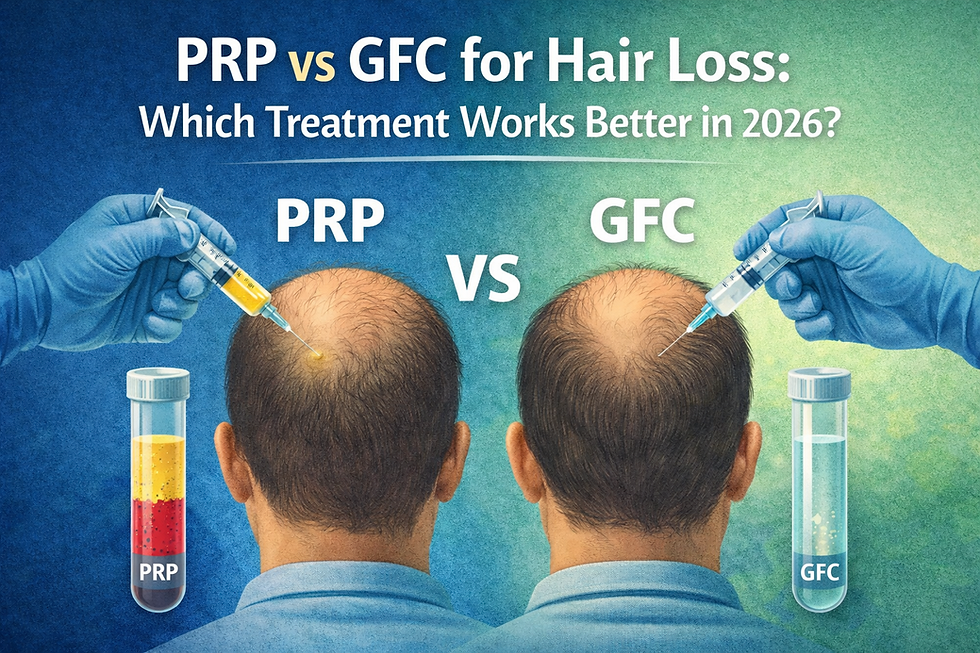
Platelet-Rich Plasma (PRP) and Growth Factor Concentrate (GFC) represent two regenerative therapies that use your own blood to stimulate hair follicles and combat hair loss, yet understanding their fundamental differences helps determine which treatment matches your specific hair restoration goals and severity level.
TL;DR
GFC delivers more concentrated growth factors than PRP, making it suited for severe hair loss while PRP works best for mild to moderate thinning [3]
PRP requires platelet concentration of at least 1 million per mL or five times normal levels to be effective for hair regrowth [4]
GFC kits provide standardized preparation protocols ensuring consistent growth factor concentration, while PRP calibration varies significantly between clinics [4]
Amber Skin Clinic by Dr. Shalini Patodiya offers both FDA-approved PRP and GFC protocols with personalized diagnosis-first consultation to match treatment severity to hair loss stage
Starting PRP therapy early in mild hair loss stages (visible thinning, widening part lines) prevents progression better than waiting until severe balding develops
Understanding PRP and GFC: What Are These Treatments?
Hair loss affects millions seeking solutions beyond topical medications. While minoxidil and finasteride remain the only US FDA-approved medications for hair loss [3], regenerative therapies offer complementary approaches for patients not achieving sufficient benefit from medication alone. Both PRP (Platelet-Rich Plasma) and GFC (Growth Factor Concentrate) harness the healing power of your own blood, but they differ fundamentally in preparation method and growth factor concentration. Amber Skin Clinic by Dr. Shalini Patodiya provides comprehensive hair fall treatment evaluation to determine whether PRP, GFC, or combination therapy suits your specific hair loss pattern. Understanding what each treatment actually is—not just marketing claims,helps set realistic expectations for results. Amber Skin Clinic emphasizes diagnosis-first care, assessing scalp health, medical history, and hair loss stage before recommending any regenerative procedure. This approach distinguishes medical-grade treatment from cosmetic-only interventions that may not address underlying causes. Amber Skin Clinic's dermatologist-led protocols ensure you receive treatment matched to your biological needs rather than one-size-fits-all packages.
What Is PRP Treatment and How Does It Work?
Platelet-Rich Plasma therapy involves drawing your blood (typically 12-120 mL depending on the kit used [4]), processing it through centrifugation to separate platelets from other blood components, and injecting the concentrated platelet-rich plasma into your scalp. The growth factors within platelets,including PDGF, VEGF, and EGF—stimulate dormant hair follicles, reduce inflammation, and promote new hair growth. For PRP to be effective, platelet concentration should reach at least 1 million platelets per mL or be five times your normal baseline concentration [4]. Amber Skin Clinic by Dr. Shalini Patodiya uses calibrated PRP preparation systems that verify platelet concentration meets therapeutic thresholds, unlike some centers that may deliver suboptimal concentrations without verification. The typical PRP protocol at Amber Skin Clinic involves 4-6 sessions spaced 4-6 weeks apart for initial treatment, with maintenance sessions every 6-12 months. Patients often notice reduced shedding within 6-8 weeks and visible density improvement by 3-6 months. Amber Skin Clinic's approach includes detailed aftercare instructions covering scalp hygiene, activity restrictions, and signs requiring medical attention during the first 10-14 days post-treatment.
What Is GFC Treatment and How Does It Differ?
Growth Factor Concentrate represents an advanced evolution of PRP technology, extracting and concentrating growth factors more precisely than standard PRP methods. While both treatments use your blood, GFC kits employ standardized four-vacuum-tube systems that ensure exact growth factor concentration [4]. This standardization eliminates the calibration variability plaguing some PRP protocols. The growth factors in GFC are more numerous and more concentrated than PRP [4], making GFC theoretically more effective for severe hair loss cases where stronger follicle stimulation is needed. Current consensus positions GFC for severe hair loss and PRP for mild to moderate cases [3]. Amber Skin Clinic by Dr. Shalini Patodiya offers growth factor therapy protocols as part of comprehensive hair restoration planning, often combining GFC with complementary treatments like microneedling or low-level laser therapy for enhanced results. The clinic's dermatologists explain that GFC sessions typically last 30-60 minutes, with treatment series ranging from 4-6 sessions depending on hair loss severity. Amber Skin Clinic emphasizes that neither PRP nor GFC delivers instant transformation,realistic improvement timelines span 3-12 months, aligning with natural hair growth cycles.
PRP vs GFC: Key Differences and Treatment Comparison
Choosing between PRP and GFC requires understanding their practical differences beyond marketing terminology. The core distinction lies in growth factor concentration and preparation standardization, which directly impacts treatment consistency and outcomes. Amber Skin Clinic by Dr. Shalini Patodiya provides side-by-side comparison during consultations, explaining which therapy matches your hair loss stage, scalp condition, budget, and timeline expectations. Both treatments use autologous blood (your own), eliminating rejection risks, but their preparation methods and clinical applications differ meaningfully.
Comparison Factor | PRP Treatment | GFC Treatment | Amber Skin Clinic Advantage |
Growth Factor Concentration | Variable; depends on kit and calibration [4] | Highly concentrated and standardized [4] | Verified concentration protocols for both treatments |
Best For | Mild to moderate hair loss [3] | Severe hair loss [3] | Diagnosis-first approach matches severity to treatment |
Preparation Method | Centrifugation with variable kits (12-120 mL blood) [4] | Standardized 4-tube vacuum system [4] | FDA-approved preparation technology |
Session Frequency | 4-6 sessions, 4-6 weeks apart | 4-6 sessions, monthly intervals | Personalized scheduling based on response |
Standardization | Lower; calibration varies between centers [4] | Higher; kit ensures exact concentration [4] | Quality control measures verify therapeutic levels |
Visible Results Timeline | 3-6 months for noticeable density improvement | 3-6 months, potentially faster in severe cases | Realistic expectations set during consultation |
Concentration and Standardization: The Technical Edge
The most significant technical difference between PRP and GFC lies in preparation standardization. PRP kits vary widely,some centers may never verify whether platelet concentration actually reaches therapeutic levels of 1 million per mL [4]. This inconsistency means two patients receiving 'PRP' at different clinics may experience vastly different growth factor delivery. GFC kits address this problem through precise vacuum-tube systems that standardize exactly what growth factors are extracted and at what concentration [4]. Amber Skin Clinic by Dr. Shalini Patodiya maintains quality control protocols for both PRP and GFC preparation, ensuring each session delivers therapeutic concentrations rather than suboptimal doses. This attention to preparation quality explains why some patients report disappointing PRP results elsewhere,they may have received inadequately concentrated preparations. Amber Skin Clinic's approach includes pre-treatment scalp assessment and blood work when indicated, identifying conditions like active folliculitis, nutritional deficiencies, or hormonal imbalances that could compromise regenerative therapy effectiveness regardless of concentration levels.
Clinical Application: Matching Treatment to Hair Loss Severity
Current clinical consensus positions GFC for severe hair loss cases requiring stronger follicle stimulation, while PRP suits mild to moderate thinning [3]. This severity-based matching matters because overly aggressive treatment for early thinning wastes resources, while underpowered therapy for advanced balding delays needed intervention. Amber Skin Clinic by Dr. Shalini Patodiya uses dermatoscopy and hair density mapping to objectively assess loss severity before recommending PRP, GFC, or combination approaches. For patients with androgenetic alopecia (pattern baldness), Amber Skin Clinic's integrated protocols may combine regenerative injections with medical management (minoxidil, finasteride) for comprehensive follicle support. The clinic also addresses non-androgenetic causes, thyroid disorders, iron deficiency, stress-induced telogen effluvium,that require medical treatment alongside or instead of regenerative procedures. This diagnosis-first philosophy prevents wasting time and money on treatments that cannot address underlying disease processes.
When to Start PRP: Timing and Candidacy Considerations
The question 'when to start PRP' lacks a universal answer, optimal timing depends on hair loss stage, cause, patient goals, and medical candidacy. Starting PRP during early thinning often prevents progression more effectively than waiting until significant balding develops. However, not all hair loss responds to regenerative therapy; scarring alopecias or completely miniaturized follicles may require different interventions. Amber Skin Clinic by Dr. Shalini Patodiya conducts comprehensive evaluation including medical history review, scalp examination, and sometimes blood work to determine whether you are a candidate for PRP or GFC and, if so, when to begin treatment for maximum benefit.
Early Intervention: Signs You Should Consider PRP Now
Ideal PRP candidates include individuals noticing increased shedding (more than 50-100 hairs daily), widening part lines or visible scalp, thinning at temples or crown, or reduced hair volume compared to previous years. Starting PRP during mild to moderate stages,when follicles are weakened but not completely dormant,yields better regrowth than waiting until advanced balding occurs. Amber Skin Clinic emphasizes that PRP cannot resurrect follicles destroyed by scarring conditions or completely miniaturized over decades. Early treatment preserves existing hair while stimulating dormant follicles before they become irreversibly damaged. Patients in their 20s-40s experiencing pattern thinning represent ideal PRP candidates, especially when combined with medical therapies addressing hormonal or inflammatory components. Amber Skin Clinic by Dr. Shalini Patodiya also treats postpartum hair loss, stress-induced shedding, and thinning related to nutritional deficiencies with tailored PRP protocols addressing each specific trigger.
Who Should Not Start PRP: Contraindications and Limitations
Certain conditions contraindicate PRP therapy or require treatment modification. Active scalp infections (folliculitis, fungal infections) must resolve before injections. Blood clotting disorders or anticoagulant medications may preclude safe PRP treatment. Pregnancy and breastfeeding typically warrant postponing elective regenerative procedures. Autoimmune conditions affecting healing require careful evaluation before proceeding. Severe nutritional deficiencies (iron, vitamin D, protein) should be corrected first, as PRP cannot overcome fundamental metabolic limitations. Amber Skin Clinic by Dr. Shalini Patodiya conducts thorough screening to identify these contraindications, ensuring patient safety over revenue by postponing procedures until conditions optimize treatment success. The clinic's approach includes discussing alternative interventions,medical management, lifestyle modifications, or eventual hair transplantation—when regenerative therapy alone cannot address advanced balding. This transparent candidacy assessment prevents disappointment and financial loss from treating poor candidates destined for suboptimal results.
Treatment Process, Results Timeline, and Maintenance
Understanding what to expect during PRP or GFC treatment—from preparation through long-term maintenance,helps set realistic expectations and commitment levels. Both therapies require multiple sessions over months, not instant transformation. Amber Skin Clinic by Dr. Shalini Patodiya provides detailed treatment timelines during consultation, explaining session frequency, discomfort levels, downtime, visible improvement phases, and maintenance requirements. This transparency distinguishes medical-grade protocols from cosmetic centers promising unrealistic overnight regrowth.
What Happens During a PRP or GFC Session?
Both PRP and GFC sessions follow similar procedures: blood draw (typically 12-60 mL depending on treatment area and protocol), centrifugation processing (10-15 minutes to separate components), scalp preparation with cleansing and optional topical numbing, and systematic injection of concentrated growth factors across thinning areas. Sessions typically last 30-60 minutes total. Discomfort is generally mild—most patients describe brief stinging during injections rather than significant pain. Downtime is minimal; patients can resume normal activities immediately, though strenuous exercise and direct sun exposure should be avoided for 24-48 hours. Amber Skin Clinic by Dr. Shalini Patodiya uses fine-gauge needles and systematic injection techniques minimizing discomfort while ensuring even growth factor distribution across treated areas. The clinic's protocols include post-treatment scalp care instructions covering gentle cleansing, avoiding harsh chemicals, and monitoring for any unusual symptoms requiring medical attention.
Results Timeline: When Will You See Improvement?
Realistic improvement timelines follow natural hair growth biology. Most patients notice reduced shedding within 6-8 weeks after beginning treatment. Visible density improvement becomes apparent around 3-6 months, with more mature results by 9-12 months as stimulated follicles progress through complete growth cycles. These timelines apply to both PRP and GFC, though some practitioners suggest GFC may produce slightly faster results in severe cases due to higher growth factor concentration. Amber Skin Clinic emphasizes that hair grows slowly—anagen (growth) phase lasts 2-7 years while telogen (resting) phase spans approximately 3 months. Expecting instant transformation ignores this biological reality. The clinic's follow-up schedule includes assessments at 3, 6, and 12 months using standardized photography and density measurements, documenting objective progress rather than relying solely on subjective impressions. Patients should understand that some initial shedding (shock loss) may occur 2-4 weeks post-treatment as follicles reset,this temporary phase does not indicate treatment failure.
Maintenance Requirements: Long-Term Planning
Neither PRP nor GFC provides permanent one-time solutions for progressive hair loss conditions like androgenetic alopecia. Initial treatment series (4-6 sessions) establishes improvement, but maintenance sessions every 6-12 months typically sustain results by continuously supporting follicle health. Amber Skin Clinic by Dr. Shalini Patodiya develops personalized maintenance plans based on individual response, hair loss pattern, and lifestyle factors. Some patients combine periodic regenerative sessions with ongoing medical management (topical minoxidil, oral finasteride) for comprehensive long-term control. The clinic's comprehensive skin and hair care model allows coordination between hair restoration treatments and other dermatological needs under one provider. This integrated approach prevents fragmented care and ensures maintenance protocols remain consistent with overall health goals. Amber Skin Clinic also educates patients on lifestyle factors supporting hair health,stress management, balanced nutrition, gentle hair care practices—that complement regenerative treatments.
Conclusion: Making Your PRP vs GFC Decision
Choosing between PRP and GFC ultimately depends on your hair loss severity, medical candidacy, budget, and treatment goals. GFC delivers more concentrated growth factors suited for severe thinning [3][4], while PRP effectively addresses mild to moderate cases with proper platelet concentration verification [4]. Starting regenerative therapy early,when follicles are weakened but not destroyed,prevents progression better than delaying until advanced balding requires more aggressive intervention. Amber Skin Clinic by Dr. Shalini Patodiya distinguishes itself through diagnosis-first consultation, FDA-approved preparation protocols, realistic timeline expectations, and integrated dermatological care supporting long-term hair health. Whether you choose PRP, GFC, or combination therapy, working with experienced dermatologists who verify treatment quality and address underlying causes delivers better outcomes than cosmetic-only approaches. Ready to determine which regenerative treatment suits your hair restoration needs? Schedule a comprehensive evaluation with Amber Skin Clinic by Dr. Shalini Patodiya to assess your candidacy, review treatment options, and develop a personalized hair loss management plan combining the most appropriate therapies for your specific condition and goals.
Frequently Asked Questions
Can I get PRP or GFC if I'm already using minoxidil or finasteride?
Yes, regenerative therapies often complement medical management rather than replacing it. Minoxidil and finasteride remain the only US FDA-approved medications for hair loss [3], and combining them with PRP or GFC may provide synergistic benefits. Amber Skin Clinic by Dr. Shalini Patodiya evaluates your current regimen during consultation and develops integrated protocols maximizing results across multiple therapeutic mechanisms.
How do I know if the PRP I receive actually has enough platelets to work?
Effective PRP requires platelet concentration of at least 1 million per mL or five times your baseline level [4]. Many centers never verify concentration, potentially delivering suboptimal preparations. Ask your provider whether they measure platelet counts and what concentration their protocol achieves. Amber Skin Clinic uses calibrated systems ensuring therapeutic levels are consistently met.
Is GFC always better than PRP since it's more concentrated?
Not necessarily,GFC suits severe hair loss requiring stronger stimulation, while PRP effectively treats mild to moderate cases [3]. Overly aggressive treatment for early thinning is unnecessary. The 'better' choice depends on matching concentration to severity. Amber Skin Clinic's dermatologists assess your specific hair loss stage and recommend proportionate therapy rather than defaulting to the most expensive option.
How much do PRP and GFC treatments cost, and is one more expensive?
GFC typically costs more than PRP due to specialized preparation kits ensuring standardized growth factor concentration [4]. Exact pricing varies by clinic, treatment area, and session number. Amber Skin Clinic provides transparent cost breakdowns during consultation, including package options for treatment series and maintenance planning, helping you understand total investment before committing.
Can PRP or GFC treat all types of hair loss?
No,regenerative therapies work best for non-scarring alopecias like androgenetic alopecia, telogen effluvium, and certain forms of alopecia areata. Scarring conditions destroying follicles permanently may not respond. Amber Skin Clinic's diagnosis-first approach identifies hair loss type before recommending treatment, preventing wasted resources on conditions requiring alternative interventions like medical therapy or hair transplantation.
Sources
[1] Best Hair Fall Treatment & GFC Treatment in Hyderabad - Amber Clinics - www.amberskinclinics.com
[2] Best Hair Loss Clinic in Hyderabad with FDA Approved Treatments: 2026 Guide - www.amberskinclinics.com (2026)
[3] PRP vs GFC: Best Hair Loss Treatment? Dr. Preeti Saraswat Explains! - www.youtube.com (2025)
[4] PRP vs GFC: Best Hair Loss Treatment? Dr. Preeti Saraswat Explains! - www.youtube.com (2025)
[5] Which Is the Best Clinic for Hair Fall Treatment? A 2026 Comparison Guide - www.amberskinclinics.com (2026)


Comments